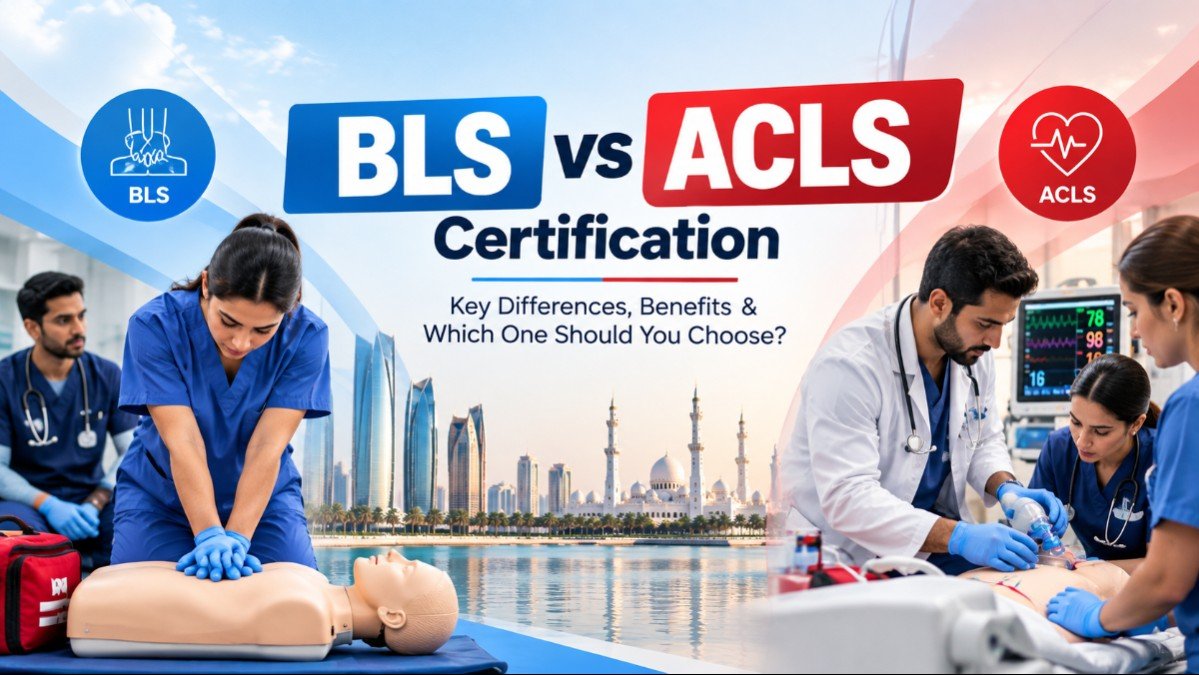
When someone suddenly collapses or stops breathing, there is not much time to think about what to do next. You need to know how to respond, and you need to respond quickly. For healthcare professionals, having the right emergency training can make a big difference in these situations. That is exactly where BLS and ACLS certification comes in the picture. Both certifications are related to saving lives during medical emergencies, but they are not designed for the same purpose exactly. BLS focuses on the basic skills needed to respond to a life-threatening emergency, while ACLS goes further into the management of serious cardiac emergencies. If you are wondering about the differences between BLS and ACLS the easiest way to understand is to look at the type of emergency care each course teaches.
What is BLS certification?
BLS stands for basic life support. It is usually one of the first emergency care certifications health care professionals come across. The focus is on what you need to do when a person is unresponsive, is not breathing normally or is experiencing another immediate life-threatening emergency. The idea is simple: recognize the problem, start the right response, and provide basic life support until further medical help is available. A typical BLS course UAE covers practical skills like CPR, choking response, and basic emergency assessment.
What Do You Learn in BLS Training?
BLS training commonly covers:
Adult, child, and infant CPR
How to use an AED
Recognising cardiac arrest
Responding to choking
Basic airway support
Initial emergency assessment
Working with a team during an emergency
One of the useful things about BLS training is that it is not just about sitting in a classroom and listening to someone explaining CPR. Practical training gives you the chance to actually practice the steps. BLS training can be useful for nurses and medical students, and other healthcare workers. If you are seeking BLS certification in Abu Dhabi, make sure that you check what the course includes and whether it meets the requirements of your workplace or professional role.
What is ACLS certification?
BLS stands for Advanced Cardiac Life Support. As the name suggests it deals with more advanced situations, particularly serious cardiac emergencies. ACLS goes beyond CPR. It teaches you how to assess a patient's condition, recognize different cardiac rhythms, follow appropriate treatment and work together during a resuscitation effort. For example, if you are dealing with a cardiac arrest you need to understand the patient's ECG rhythm, know when certain interventions are appropriate and communicate clearly with the rest of the medical team. This is exactly where advanced cardiac life support certification becomes especially relevant.
What Does ACLS Training Cover?
Depending on the course and provider, ACLS training may include:
Cardiac arrest management
ECG and rhythm recognition
Advanced airway management
Defibrillation and cardioversion
Emergency medication protocols
Resuscitation algorithms
Post-cardiac arrest care
Team-based emergency response
BLS vs ACLS Certification : What Is the Difference?
Feature | BLS Certification | ACLS Certification |
Full Form | Basic Life Support | Advanced Cardiac Life Support |
Main Focus | Immediate life-saving response | Advanced management of cardiac emergencies |
Level | Basic emergency care | Advanced emergency care |
Common Skills | CPR, AED, choking response | ECG, medications, airway management, cardiac algorithms |
Suitable For | Healthcare workers, students, first responders | Doctors, nurses and other qualified healthcare professionals |
Patient Care | Initial response | Advanced assessment and treatment |
Benefits of BLS certification
You never really know when an emergency is going to happen. A patient might suddenly become responsive during a routine procedure or someone might suffer cardiac arrest in a hospital corridor.
Helps you respond quickly
BLS teaches you what to look for and what steps to take during an emergency. Practicing these skills can make it easier to respond without wasting valuable time.
Builds confidence
It's completely normal for an emergency to feel stressful. Hands-on practice can help you become more comfortable performing CPR and following basic emergency response processes.
Provides immediate patient support
BLS allows you to provide appropriate and immediate care while additional medical support is on the way.
May be required for the job
Many healthcare organisations require employees in certain roles to hold current BLS certification. The exact requirement depends on the employer and the applicable regulations.
Improve team response
During an emergency, several people might need to work together. Knowing your role and communicating clearly can make the response more organized.
Benefits of ACLS certification
ACLSs are especially useful for healthcare professionals who might have to deal with serious cardiovascular emergencies as part of their work.
Develops advanced cardiac care skills
ACLS introduces you to advanced approaches to cardiac emergencies including rhythm recognition medications and airway management
Helps with emergency decision making
A cardiac emergency can change from one moment to the next. ACLS training teaches you how to use recognized algorithms and make decisions based on the patient's condition.
Prepares you for critical situations
Professionals working in emergency departments, intensive care and critical care might encounter patients who need advanced life support intervention.
Supports professional development
For some health care rules maintaining any appropriate ACLS certification can be part of workplace or professional requirements.
Encourages better teamwork
ACLS is not just knowing medical procedures. Teamwork is a big part of the resuscitation. Everyone needs to understand their role or communicate properly and work together when time is limited
BLS or ACLS with certification should you choose?
This is probably the biggest question that most people have after learning about the 2 courses. The answer depends on your job, your current training, and what patients you work with. If you are a medical student or just starting your healthcare career BLS is generally a sensible foundation. It helps you learn the basic emergency skills before moving into more advanced training. If you are a nurse or other healthcare professional your workplace might require BLS ACLS or even both. It's worth checking your employers requirements rather than just choosing a course simply because it sounds more advanced. If you work in an emergency department critical care setting or another area where serious cardiac emergencies are common, BLS might be relevant to your responsibilities. And if you're completely new to life support training, starting with BLS can help you get comfortable with the basics.
Why choose DIMS for BLS and ACLS training in Abu dhabi?
When you are choosing a healthcare training provider the course content matters but so does the way the training is delivered. Emergency skills are much easier to understand when you actually get the chance to practice them. You want training that allows you to ask questions, work through realistic situations and understand what you are expected to do during an emergency. DIMSOffers BLS and ACLS training in Abu Dhabi for healthcare professionals looking to develop their emergency care skills.
Some of the things you can look for when choosing DIMS include:
Experienced healthcare trainers
Practical, hands-on training
Industry-relevant course content
Certification-focused learning
Training designed for healthcare professionals
A structured environment for practising emergency response skills
FAQs
What is the difference between ACLS and BLS certification?
BLS focuses on basic emergency skills like CPR choking response and immediate life support. ACLS covers more advanced cardiac emergency care including ECG interpretation and medications.
Can I take ACLS without BLS certification?
The requirements can vary depending on the training provider and your professional role. As ACLS builds on basic life support knowledge you might need appropriate BLS or CPR knowledge before taking the course.
How long is BLS certification valid?
The validity timeline depends on the organization issuing your certificate. Your workplace might also have its own renewal requirements.
Who needs BLS certification?
BLS is generally intended for healthcare professionals who are involved in managing or responding to serious cardiovascular emergencies. This might include doctors, nurses and other qualified healthcare experts.
Is BLS certification required for healthcare professionals?
Many healthcare employers require current BLS certification for certain positions. But requirements can vary by job and professional role.
Where can I get BLS and ACLS certification in Abu Dhabi?
If you are looking for BLS certification in Abu Dhabi or ACLS certification in Abu Dhabi you can explore the training options available at DIMS.