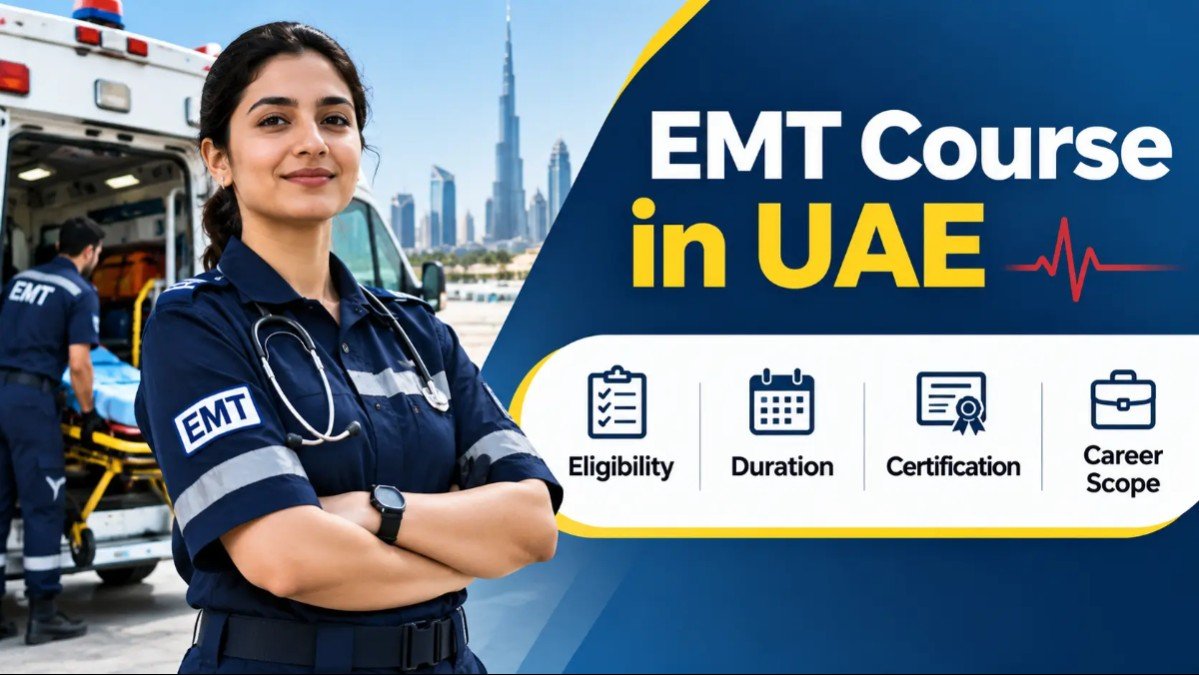
In an emergency involving sudden breathing difficulties or a cardiac emergency, the first few minutes can make a significant difference. Emergency medical technicians are trained to assess patients, provide appropriate pre-hospital care, and support safe transportation to a medical facility. An EMT course in the UAE introduces you to the essential knowledge and practical skills required for pre-hospital emergency care. It can be a useful learning option for you if you are a healthcare student or medical support staff. But choosing the right course requires way more than just checking the duration or certificate. You also need to understand the entry requirements, practical training involved, the assessment process, and the rules that might apply if you want to work as an EMT in the UAE.
What is an EMT course?
An emergency medical technician course teaches you how to recognize medical emergencies and provide initial care before a patient reaches a hospital. Depending on the program, training might cover first aid, CPR, trauma care, vital signs monitoring, patient handling, and emergency communication. For example, when responding to a road accident, an EMT might need to reassess the scene, identify immediate risks, check the patient's condition, and provide appropriate assistance within their authorized scope of practice. Most programs even combine theoretical learning with practical exercises to help you understand emergency procedures. But completing training does not automatically qualify you to work as a licensed EMT. Your professional employment might require additional qualifications and approval from the relevant authority
Eligibility Requirements
Training providers may consider the following factors:
Minimum age: The provider may specify a minimum age for admission.
Educational qualifications: Applicants may need a school-level qualification or a relevant healthcare qualification, depending on the course.
Language skills: Participants should be able to understand instructions, communicate with patients, and complete assessments in the language used for training.
Medical fitness: Some programmes or professional roles may require applicants to meet specific fitness requirements.
Previous experience: Certain professional pathways require relevant healthcare experience or previous registration.
What does EMT training cover
EMT training focuses on recognizing emergencies, assessing patients, and providing appropriate initial care. The exact curriculum varies by provider but following subjects are commonly associated.
Emergency assessment and scene safety
You can learn how to identify potential hazards, assess the situation and recognize urgent patient needs before providing assistance.
First aid and CPR
Training might cover responding to unconsciousness, recognizing cardiac arrest, and performing CPR.
Trauma care
You can study bleeding control suspected fractures and precautions for patients with spinal injuries.
Patient assessment
This involves checking responsiveness, breathing vital signs and symptoms to understand the patient 's condition and also identify warning signs.
Basic emergency response and transportation
Depending on the program you can learn safe patient handling positioning documentation and handover procedures when transferring patients to hospital teams.
Who Should Consider EMT Training?
EMT training may be relevant to:
Nursing students and qualified nurses seeking additional emergency care knowledge.
Healthcare professionals who need to strengthen their patient assessment skills.
Ambulance personnel and emergency response team members.
Medical support staff working in settings where emergencies may occur.
EMT course duration and certification
The duration of anEMT course in the UAE depends on the program training hours and qualification pathway. There is no single duration that applies to every course advertised as EMT training.
The unified health care professional qualification requirements specified training and other qualification criteria for particular EMT pathways. You need to check the current requirements applicable to your intended role rather than just assuming that completing any short course will qualify you for a professional license. At DIMS medical services the certificate in emergency medical technician covers patient assessment medical emergencies and safe patient transportation. It is important to distinguish between a training certificate and professional license.
Factor | Details |
Course | Emergency Medical Technician (EMT) |
Location | UAE; requirements may differ by emirate |
Training | Theory and practical exercises, depending on the programme |
Duration | Provider- and qualification-specific; confirm the scheduled hours and practical requirements |
Assessment | May include written examinations and practical skills assessments |
Certification | Depends on the course, awarding organisation, and assessment requirements |
Professional licensing | Separate regulatory requirements may apply before employment as an EMT |
EMT versus EMS what is the difference?
EMT and EMS are closely related terms but they have different meanings. EMT stands for emergency medical technician while EMS stands for emergency medical services. An EMT is a professional trained for emergency care role whereas EMS is a wider system responsible for coordinating emergency medical response. If you are searching for EMS training UAE identify whether you need foundational emergency response training or qualification for professional employment.
Basis | EMT | EMS |
Meaning | Emergency Medical Technician | Emergency Medical Services |
What it refers to | A trained emergency care professional | The wider emergency medical response system |
Main focus | Patient assessment, initial care, and other authorised pre-hospital duties | Coordinating emergency calls, response teams, patient care, and transportation |
Training | EMT-specific education and practical skills | Training varies according to the particular EMS role |
Career options | EMT positions, subject to qualification and licensing | A wider range of roles across emergency response and medical services |
Career scope after EMT training in the UAE?
EMT training supports the development of emergency care skills, but career opportunities depend on your qualifications, experience, and licensing status. Ambulance services are one potential career direction for appropriate qualified and licensed emergency medical professionals. Emergency response teams at workplaces and public events also need personnel who understand emergency procedures. EMT related knowledge might be useful in these environments depending on the duties and qualifications required. Healthcare facilities and medical support organizations might offer other relevant opportunities. But an EMT certificate alone does not automatically qualify you for a clinical ambulance option. Employers might even require specific qualifications and professional registration.
How to choose an EMT Training provider in the UAE?
When comparing providers, you need to look beyond the course fees and duration. Review the curriculum to understand which emergency care subjects are covered and how much practical training is included. Ask about the instructors' qualifications and facilities used for skills practice. You should also confirm the exact certificate awarded and any claims regarding accreditation or professional recognition.
How to enroll for an EMT course in UAE?
Start by identifying your training goals and check the course eligibility criteria. Compare the curriculum, duration, practical sessions, and certification details before submitting your application. If you plan to pursue professional EMT employment, confirm whether the program meets the relevant qualification requirements and whether you need additional training. Start your EMT training with DIMS Medical Services.
FAQs
What is an EMT course in the UAE?
It is a training program that teaches emergency assessment, initial patient care, and pre-hospital response skills.
Who can take EMT training?
Eligibility varies by program; healthcare students, professionals, and other applicants might qualify depending on the course requirements.
How long does EMT training take?
The duration depends on the program and qualification pathway. You need to confirm the required training hours with the provider.
Is EMT certification useful for healthcare careers?
It can strengthen emergency care knowledge but professional EMT employment might require additional qualifications and licensing.
What is the difference between EMT and EMS?
EMT is an emergency medical professional while EMS refers to the wider emergency medical services