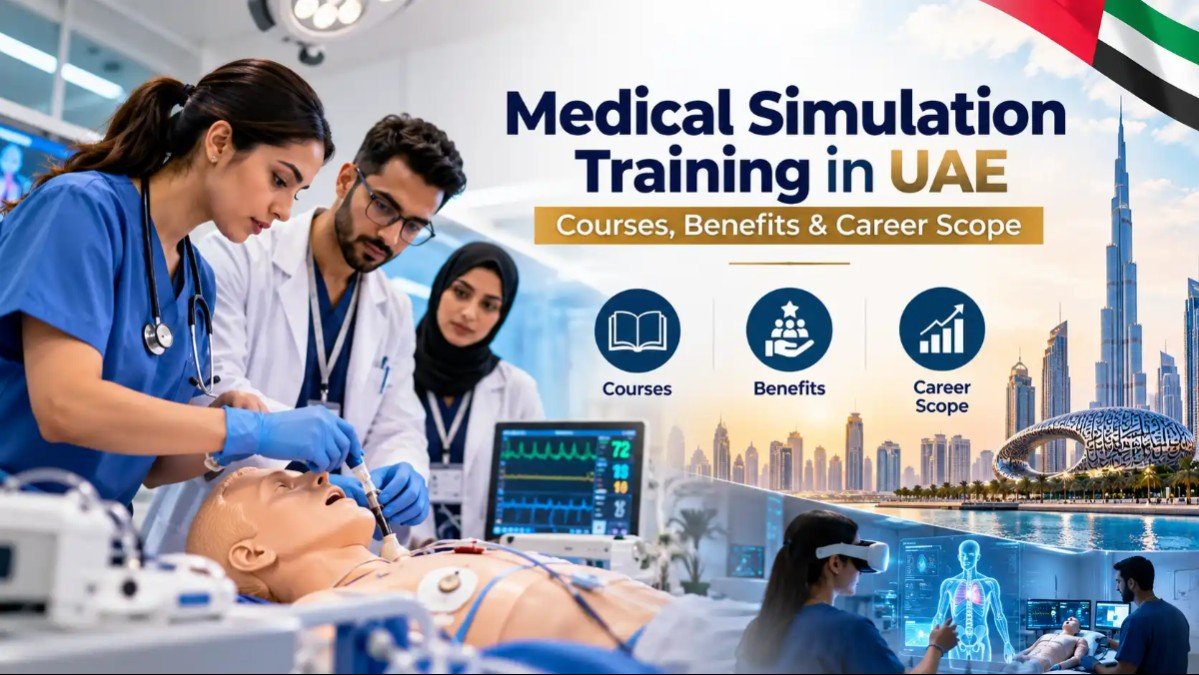
Here is a big difference between knowing what to do and being comfortable doing it when the pressure is on. A healthcare professional might know the steps involved in managing a cardiac emergency. But when a patient's condition changes several things can happen at once. Someone has to assess the patient, someone might need to prepare equipment, another person might communicate with the doctor, and the whole team needs to work without getting in each other's way. You cannot always learn that same kind of situation from a textbook. This is exactly where medical simulation training UAE can be useful.
It gives healthcare professionals a chance to practice clinical situations in a controlled setting before they face similar situations with real patients. Instead of just talking about any emergency, you can actually work through one. You can assess a simulated patient, make decisions, communicate with their team and then discuss what you could actually have done differently. That practical element is what makes simulation training different from a standard classroom session.
In the UAE, medical simulation can be useful for doctors, nurses, medical students, and other healthcare professionals who want to strengthen practical skills. DIMS Provides healthcare education and training programs with a focus on practical learning and professional skill development. But before choosing a course, you need to understand what simulation training actually involves and whether it fits what you want to learn.
What is medical simulation training?
In simple terms medical simulation is practice before the real thing. Instead of just practicing on a real patient, you can work with a simulator, task trainer, or role-play scenario that recreates part of a critical situation. For example, a training session might present a patient whose vital signs are changing. You also need to assess the situation, decide what needs attention first and then communicate with the rest of the team. The instructor can stop the scenario and discuss what happened. That makes learning much more active than just sitting through a lecture. As a nurse you might practice a particular procedure on a task trainer while a group of doctors and paramedics might work together through a simulated emergency. And there is an important distinction. Simulation does not replace real clinical experience. It gives you another place to practice and prepare before applying those skills in real patient care settings
Depending on the course, simulation may be used to practice:
Patient assessment
Emergency response
CPR and resuscitation
Clinical procedures
Decision-making
Communication
Team coordination
Patient-safety practices
Responding to a patient's changing condition
Simulation can also be done individually or with a group.
Why is medical simulation training important in healthcare?
Some healthcare situations are routine, others are not. A nurse might perform the same type of patient assessment many times in a week but a serious emergency might happen much less frequently. When it does happen, the response still needs to be quick and organized.
You can practice without putting a patient at risk
This was probably the biggest advantage. If someone makes a mistake during a simulated scenario, the instructor can stop, explain the problem, and let you try again. Nobody wants a healthcare professional to learn an important lesson for the first time while treating a real patient.
It helps with situations you don't see every day
Not every healthcare professional regularly encounters cardiac arrest or sudden patient deterioration. That does not mean you should be completely unfamiliar with how to respond. Simulation allows you to rehearse situations that might not happen often but still require a fast and coordinated response.
Repetition can make difficult skills feel more familiar
The first time you perform a procedure or respond to an emergency scenario, there can be a lot to think about. With practice, some of these steps become more familiar. That does not mean simulation makes someone automatically ready for every real world situation. Clinical judgment still develops through education and experience.
Types of medical simulation training courses in the UAE
Not every simulation course teaches the same thing. The right option depends on your role experience and the skills you want to improve.
Basic life support simulation training
Basic life support is a starting point for many healthcare professionals. The focus is on responding to life threatening situations and providing immediate support while following the appropriate emergency procedures
Depending on the program, scenarios may cover:
Trauma assessment
Airway emergencies
Shock
Acute deterioration
Emergency stabilisation
Team coordination
Advanced cardiac life support simulation
It deals with more complex cardiovascular emergencies. This is exactly where simulation can be particularly helpful because you have to bring several skills together. You need to assess a patient, interpret information and communicate with the team. Training scenarios might involve cardiac arrest, emergency medical situations and team communication.
Emergency and trauma simulation training
Emergency departments can be really unpredictable. Our team might have to deal with trauma or shock problems or patients whose condition is deteriorating quickly. Emergency and trauma simulation lets you practice these situations without waiting for them to happen in real life. Depending on the program scenarios might cover trauma assessment shock and acute deterioration.
Nursing simulation training
Nursing involves much more than performing individual critical tasks. As a nurse you have to observe the patient, notice changes and communicate concerns. Nursing simulation can bring these different responsibilities together. Training might include patient assessment, vital sign monitoring, medication administration and infection control.
Procedure based simulation training
Sometimes you do not need a full emergency scenario. You just need a chance to practice a particular skill. This is exactly where procedure based simulation comes in the picture. Depending on the program you might practice things like airway management injection techniques or other basic clinical procedures. The benefit is simple: you can practice the technique, receive feedback and try again.
Who Can Benefit From Medical Simulation Training?
Medical simulation is not just for students.
Depending on the course, it can be useful for:
Doctors
Nurses
Paramedics
Medical students
Nursing students
Emergency-care professionals
Critical-care teams
Allied healthcare professionals
Clinical educators
Healthcare organisations
What are the benefits of medical simulation training
The biggest benefit is that simulation gives you somewhere to practice before the stakes are real.
Practical skills
Some clinical skills are difficult to learn properly just by reading about them. Simulation gives you a chance to physically practice selected techniques and repeat them when necessary.
Better decision making
A good simulation scenario does not always give you an obvious answer. You might have to assess information, decide what matters first and determine what needs to happen next.
Patient safety awareness
Simulation can highlight how small mistakes can affect the wider care process. It gives you an opportunity to practice checking information, following procedures, and communicating clearly.
Teamwork
A team can know all the right clinical steps and still struggle if nobody communicates properly. Team simulations make these communication problems easier to notice and discuss.
Feedback
After a scenario participants can talk through what happened with the trainer. That feedback is important because you might not realise what you missed while you were focused on the situation itself.
What is the career scope after medical simulation training
It is important to be realistic here. Completing a simulation course does not automatically qualify you for a new job or even guarantee a promotion. Your professional qualifications, clinical experience, and licensing requirements all matter. What simulation can do is enhance the practical side of your professional development. It might be useful if you are interested in areas like critical care nursing trauma care or patient safety.
How do you choose a medical simulation training course in the UAE?
There are many medical courses UAE professionals can consider. The challenge is finding one that can actually be useful.
Look at what you will actually be learning?
Do not stop at the course title. Read the curriculum and ask what skills will I practice? How much of the course is hands-on? The answers will tell you much more than the course name.
Find out who is teaching you
Failure experience matters. If you are taking clinical training look at the healthcare and teaching Bangalore of the instructor and where that information is provided.
Check this simulation setup
You do not necessarily need the most expensive technology. What matters is the equipment and scenarios that allow you to practice skills the course promises to teach. Ask what simulation equipment is used and whether the course includes individual practice.
Check the certificate
If you need the certificate for work or professional development do not make any assumptions from sub check who issues it and also what it represents. If you are taking the course simply to build skills the practical value of the training might more important than the certificate itself
Medical simulation training with DIMS
When you are choosing a training provider, it helps to look beyond the marketing language and understand what the actual learning experience looks like. DIMS provides healthcare-focused education and professional training programs in the UAE with practical and skill-based learning forming part of the healthcare training approach. For professionals considering simulation-based healthcare education UAE the course details are worth reviewing carefully. Look at the learning objectives, course content, practical sessions and eligibility requirements.
Why choose DIMS for medical simulation training?
If you are comparing training providers start with the basics. Does the program give you meaningful practical training? Is the content relevant to your role? The exact course content and certification details can vary by program so you need to check the current course information before you make any decision.
DIMS focuses on healthcare education and practical professional training, with areas such as:
Simulation-based learning
Practical healthcare training
Structured course delivery
Clinical skill development
Professional learning
Training for healthcare professionals
Faqs
What is medical simulation training?
Medical simulation training allows healthcare professionals to practice clinical skills and respond to realistic healthcare situations in a controlled training environment.
Who can join medical simulation training in the UAE?
It all depends on the course. Doctors, nurses , medical students and nursing students might be eligible for different types of simulation training.
Is medical simulation useful for nurses?
Yes nurses can also use simulation to practice patient assessment, emergency response and clinical procedures. It can be useful for both nursing students and qualified nurses, although the appropriate course level will depend on the experience.
What skills can I learn through healthcare simulation training?
Depending on the course, you might practice emergency response patient assessment, clinical procedures and communication.
Does simulation training replace clinical experience?
No, simulation is a way to practice and prepare; it does not replace supervised clinical experience with real patients.
How do I choose the right simulation course?
You can start with your current role and the skill you want to develop. Then check the course curriculum and eligibility requirements.
Does DIMS Medical simulation training in the UAE?
DIMS provides healthcare education and professional training programs. The available course schedules and eligibility requirements can change so you need to check the information directly before enrolling.
So medical simulation is useful for the simple reason that healthcare professionals get a chance to practice before they have to perform under real pressure. You can work through an emergency practice, a procedure, communicate with a team and make a mistake then talk through what happened all without putting a real patient at risk. That makes medical simulation training UAE useful for a wide range of healthcare professionals. If you are considering a medical simulation course UAE DIMS offers healthcare-focused training options that can support practical skill development and continued professional support