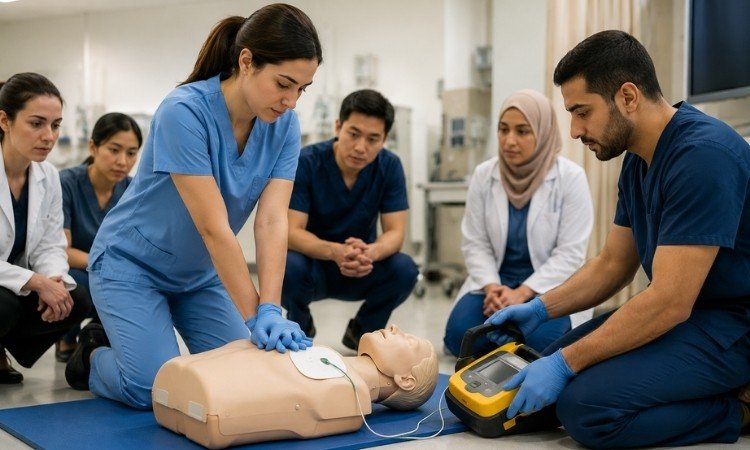
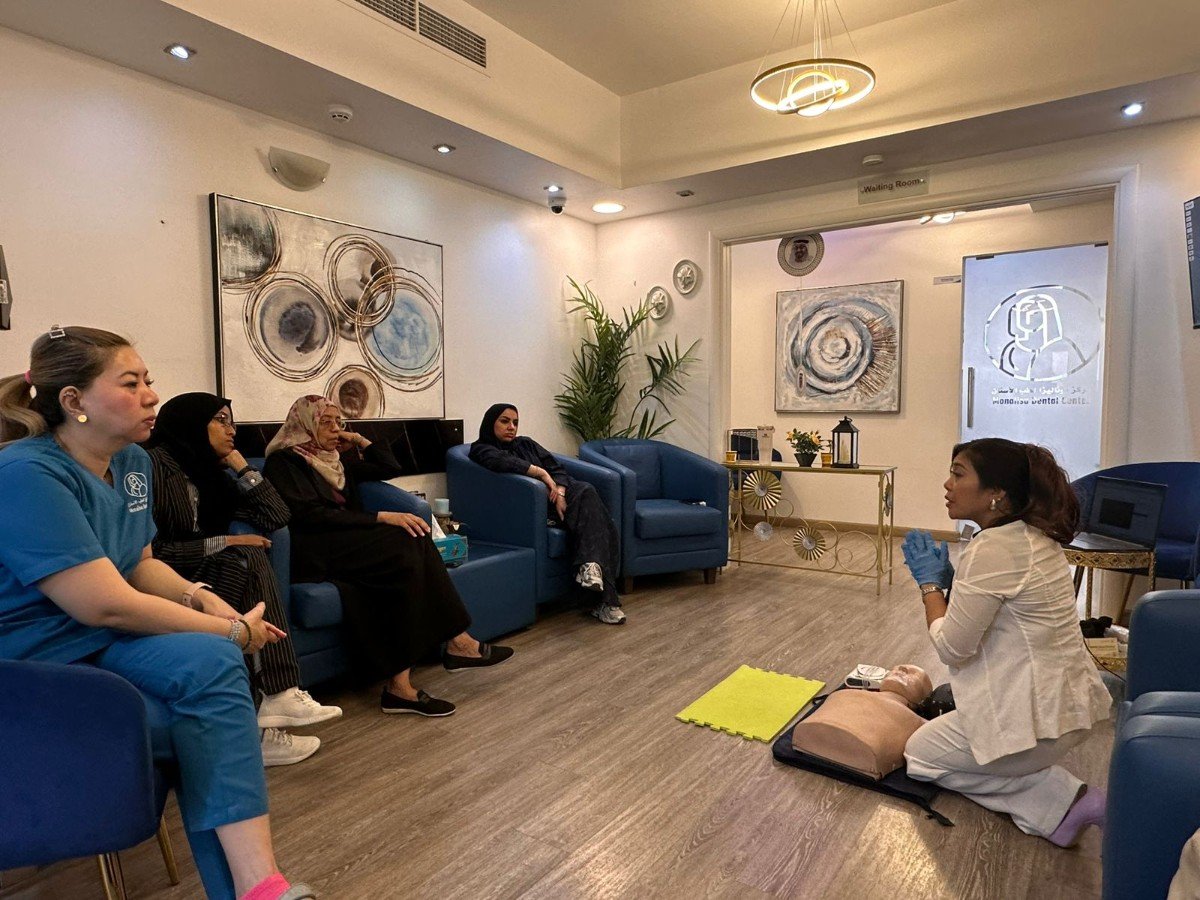
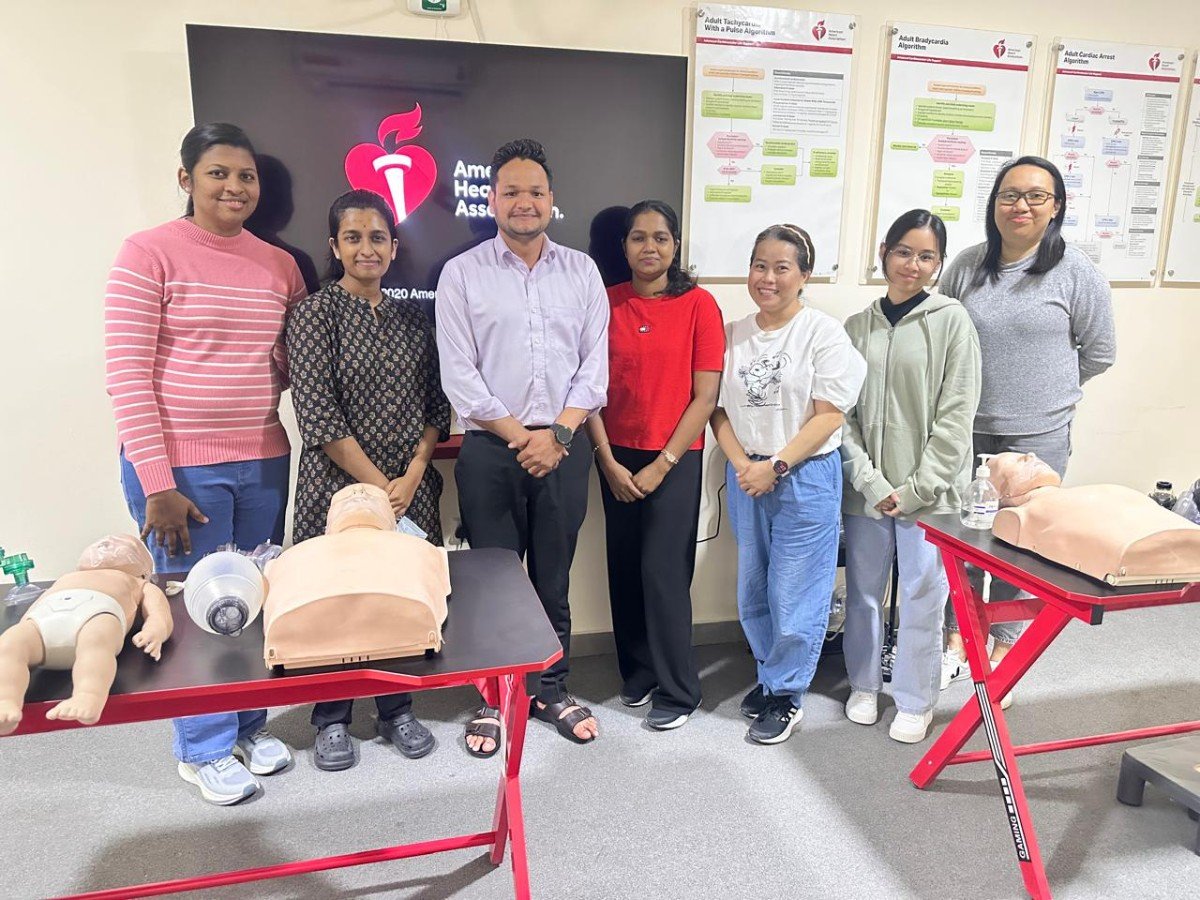
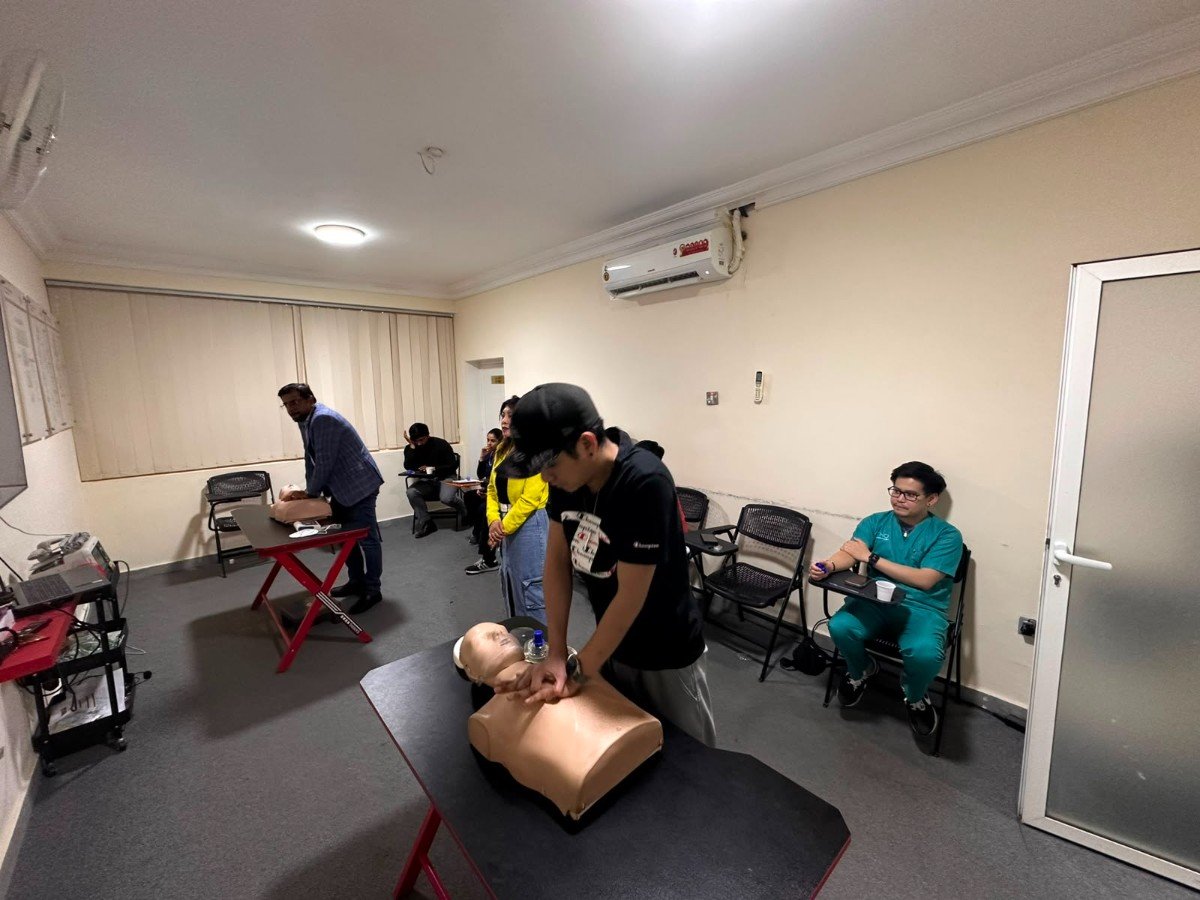
A medical emergency can happen without warning. In a hospital, clinic, dental practice, ambulance, or other healthcare setting, a patient's condition can change within seconds. When that happens, healthcare professionals need to know what to do immediately rather than wait for someone else to take over.
This is where BLS Training in Abu Dhabi becomes important. Basic Life Support (BLS) training equips healthcare professionals with practical skills to respond to life-threatening emergencies, including cardiac arrest, breathing emergencies, and airway obstruction.
For doctors, nurses, paramedics, dentists, and other healthcare workers, BLS is not simply about completing a course. It is about being prepared to recognise an emergency, respond appropriately, use available equipment such as an AED, and work effectively with other members of the healthcare team.
What Is BLS Training?
BLS stands for Basic Life Support. It is training designed to help individuals respond to life-threatening emergencies, particularly situations involving cardiac arrest or the loss of normal breathing.
For healthcare professionals, BLS training generally focuses on practical emergency-response skills. Depending on the course and certification provider, participants may learn and practise CPR, AED use, basic airway management, choking response, and effective team-based emergency care.
BLS is different from advanced life support because it focuses on the immediate actions required before or alongside more advanced medical intervention. The exact course content can vary depending on the training organisation and certification standard.
For healthcare professionals working in Abu Dhabi, choosing a course that matches their professional role and workplace requirements is particularly important.
Why Is BLS Training Important for Healthcare Professionals?
Healthcare professionals are often among the first people expected to respond when a patient experiences a medical emergency. Having appropriate BLS training can help them respond in a structured and timely manner.
Here are some of the key reasons BLS training matters.
1. Helps Professionals Respond Quickly to Cardiac Emergencies
Cardiac arrest requires immediate action. Delays in recognising the situation or starting appropriate emergency procedures can reduce the chances of a positive outcome.
BLS training helps healthcare professionals recognise signs of cardiac arrest and understand the appropriate initial response. Through practical training, participants can practise CPR and learn how to use an automated external defibrillator (AED) when one is available.
The goal is not to replace advanced medical care but to provide appropriate immediate support while the emergency response continues.
2. Builds Confidence During Medical Emergencies
Knowing what to do in an emergency is very different from simply reading about it.
Hands-on BLS training allows healthcare professionals to practise emergency procedures in a controlled environment. Repeated practice can make it easier to follow the correct steps when faced with a real situation.
This can be particularly valuable in busy healthcare environments, where several professionals may need to respond simultaneously.
3. Develops Essential Life-Saving Skills
One of the main benefits of BLS training is the opportunity to develop practical emergency-response skills.
Depending on the course, participants may learn about:
High-quality CPR
AED operation
Recognition of cardiac arrest
Basic airway management
Choking emergencies
Rescue breathing where applicable
Emergency assessment
Team communication and coordination
These skills are particularly relevant to healthcare professionals because emergencies can occur in many different clinical environments.
4. Improves Team-Based Emergency Response
A medical emergency is rarely handled by one person alone in a professional healthcare setting.
Doctors, nurses, paramedics, technicians, and other staff may all have different responsibilities during an emergency. BLS training can help professionals understand the importance of communication, coordination, and clearly defined roles.
Effective teamwork can make an emergency response more organised and help the team work together while additional medical support is provided.
5. Supports Patient Safety
Patient safety depends on many factors, including appropriate clinical procedures, trained staff, effective communication, and emergency preparedness.
BLS training contributes to this preparedness by giving healthcare professionals an opportunity to maintain practical emergency-response skills.
While BLS certification does not guarantee a particular patient outcome, having appropriately trained staff can be an important part of an organisation's overall approach to responding to medical emergencies.
Who Should Take BLS Training in Abu Dhabi?
BLS training is commonly relevant to healthcare professionals and others whose roles may require them to respond to medical emergencies.
Depending on professional and workplace requirements, this may include:
The exact certification requirements can vary. A healthcare professional should check the requirements of their employer, healthcare facility, professional role, and relevant UAE regulatory authority before selecting a course.
For someone working in or preparing for a healthcare career in Abu Dhabi, completing appropriate BLS Training in Abu Dhabi can be a practical way to maintain emergency-response competency.
What Skills Are Covered in BLS Training?
The content of a BLS course depends on the training provider and certification standard, but healthcare-focused BLS training commonly covers several important areas.
CPR
Participants learn the principles and practical techniques involved in cardiopulmonary resuscitation (CPR), including how to respond when a person is unresponsive and not breathing normally.
AED Use
An automated external defibrillator can be an important part of the emergency response to cardiac arrest. BLS courses commonly provide practical training on how and when to use an AED safely.
Recognition of Cardiac Arrest
Recognising cardiac arrest quickly is an essential part of an effective emergency response. Training helps participants understand when immediate action is required.
Airway and Choking Emergencies
BLS courses may also cover basic airway management and appropriate responses to choking, depending on the specific course curriculum.
Teamwork and Communication
Healthcare emergencies often require coordinated action. Participants may practise working as part of a team, communicating clearly, and carrying out different responsibilities during an emergency.
Adult, Child, or Infant Emergencies
Some BLS courses include training for adult, pediatric, and infant emergencies. However, the exact scope depends on the specific certification course, so participants should review the curriculum before enrolling.
Why BLS Certification Matters for Healthcare Careers in Abu Dhabi
Healthcare professionals work in an environment where emergency preparedness is an important part of patient care. Maintaining appropriate BLS training can demonstrate that a professional has received training in essential emergency-response procedures.
BLS certification may also be relevant to workplace training expectations, professional development, or specific facility requirements.
However, it is important not to assume that every healthcare professional in Abu Dhabi has identical certification requirements. Requirements can differ according to the profession, employer, healthcare facility, and applicable UAE regulations.
Before enrolling, professionals should confirm what type of BLS certification their employer or professional authority requires.
BLS Training in Abu Dhabi: What Should You Look For in a Course?
Choosing a BLS course should involve more than comparing prices or course duration. Healthcare professionals should make sure the training is appropriate for their role and meets the requirements they need it to meet.
Consider the following factors:
Recognition of the Certification
Check whether the certification is recognised for your intended professional or workplace requirements.
Qualified Instructors
Look for instructors with appropriate qualifications and experience in delivering BLS training.
Practical Training
BLS is a practical skill. A good course should provide opportunities to practise important procedures rather than relying entirely on theory.
CPR and AED Practice
Check whether participants receive hands-on practice with CPR and AED procedures relevant to the course.
Updated Course Content
Emergency-response recommendations and training standards can change. Make sure the course content follows the current standard used by the certification organisation.
Assessment
Find out whether the course includes practical skills assessment and how participants are evaluated.
Certification and Renewal
Before booking, understand the certificate's validity period and any applicable renewal requirements.
Course Schedule and Location
For healthcare professionals working shifts, convenient training schedules and accessible locations in Abu Dhabi can make it easier to complete the course without disrupting work commitments.
Most importantly, verify the current recognition or accreditation status of the provider and certification before enrolling.
How BLS Training Helps During a Real-Life Medical Emergency
Imagine a healthcare professional notices that a patient suddenly becomes unresponsive and is not breathing normally.
The first priority is to recognise that this may be a medical emergency and activate the appropriate emergency response system. A trained healthcare professional may then begin CPR and use an AED when available, while other members of the team provide assistance and arrange further medical care.
BLS training prepares professionals for this type of situation by giving them an opportunity to practise the sequence of actions in advance.
The training does not replace advanced medical treatment. Instead, it helps ensure that appropriate immediate steps can begin while the wider emergency response is underway.
BLS Training vs CPR Training: What's the Difference?
BLS and CPR training are closely related, but they are not necessarily the same course.
BLS Training | General CPR Training |
|---|
Generally intended for healthcare professionals and professional rescuers | Often designed for the general public or workplace audiences |
Typically includes CPR and AED skills | Primarily focuses on CPR and basic emergency response |
May include healthcare-specific emergency scenarios | Usually focuses on fundamental emergency-response skills |
May include practical skills assessment | Course structure and assessment vary by provider |
For healthcare professionals, BLS may be more appropriate when their professional role or employer specifically requires healthcare-focused life-support training.
Always check the certification requirements applicable to your particular role before choosing between a BLS and CPR course.
How Often Should Healthcare Professionals Renew BLS Certification?
There is no single renewal rule that applies to every BLS course.
Certification validity can depend on the organisation that issues the certification, the course standard, the employer, the healthcare facility, and applicable professional requirements.
Healthcare professionals should check the expiry date on their current certificate and confirm their employer's renewal requirements. If a particular professional or regulatory authority specifies a renewal schedule, that requirement should also be followed.
Keeping training current is important because emergency-response skills can become less familiar when they are not practised regularly.
Why Choose BLS Training in Abu Dhabi?
For healthcare professionals based in Abu Dhabi, completing relevant training locally can be convenient and practical.
A suitable course should provide healthcare-focused instruction, hands-on practice, qualified trainers, and certification that is appropriate for the participant's professional needs.
Local training can also make it easier for healthcare workers to find schedules that fit around hospital, clinic, or other healthcare shifts.
Rather than choosing a provider simply because it advertises itself as the “best,” compare the course content, instructor qualifications, practical training, certification recognition, assessment process, and renewal requirements.
Conclusion
Medical emergencies require more than theoretical knowledge. Healthcare professionals need to be prepared to recognise an emergency, respond appropriately, use available resources, and work effectively with their team.
BLS Training in Abu Dhabi provides healthcare professionals with an opportunity to develop and practise essential emergency-response skills, including CPR, AED use, and other procedures covered by the relevant course standard.
If you are a healthcare professional in Abu Dhabi considering BLS certification, check the course curriculum, certification recognition, eligibility requirements, and renewal conditions before enrolling. Choosing training that matches your professional and workplace requirements can help you stay better prepared when emergency situations arise.
Frequently Asked Questions About BLS Training
What is BLS training in Abu Dhabi?
BLS training teaches participants how to respond to life-threatening emergencies, particularly cardiac arrest and breathing emergencies. Healthcare-focused BLS courses commonly cover CPR, AED use, basic airway management, choking response, and team-based emergency response. The exact curriculum depends on the certification provider and course standard.
Who needs BLS certification in Abu Dhabi?
BLS certification may be relevant to doctors, nurses, paramedics, EMTs, dentists, medical students, healthcare assistants, and other healthcare professionals. The specific requirement depends on the individual's role, employer, healthcare facility, certification standard, and applicable UAE requirements.
What does a BLS course teach?
A BLS course typically teaches essential emergency-response skills such as CPR, AED use, recognition of cardiac arrest, basic airway management, choking response, and effective teamwork. Some courses may also include adult, pediatric, or infant emergency response.
How long does BLS training take in Abu Dhabi?
The duration of BLS training varies depending on the certification organisation, course format, and training provider. Some courses may be completed in a single session, while others may follow a different schedule. Check the specific provider's current course details before registering.
Is BLS training different from CPR training?
Yes. CPR is an important part of BLS, but BLS training for healthcare professionals generally covers a broader range of emergency-response skills and team-based procedures. The exact difference depends on the course provider and certification standard.